Session Mapping Techniques for Risk Threshold Alignment in Gaming and Racing
Written by Felix Foster · Aug 24, 2026

Session Mapping Techniques for Risk Threshold Alignment in Gaming and Racing
Session mapping involves structuring play periods to match predefined risk levels across poker tables, roulette wheels, and track betting windows, and researchers have documented its use in bankroll management studies since the early 2000s. Data from multiple gaming jurisdictions shows that players who set time-based limits tied to volatility metrics experience steadier equity preservation over extended periods, while those without such frameworks encounter faster drawdowns during high-variance stretches.
Poker cash games present continuous decision points where session length often ties directly to stack depth and table dynamics, and studies from the University of Nevada Reno's gaming research group indicate that sessions exceeding four hours correlate with elevated error rates once fatigue sets in. Observers note that mapping a session to a two-hour window when holding less than 50 big blinds helps contain exposure because variance compounds with each additional orbit, and similar patterns appear in multi-table online formats where software logs reveal consistent performance drops after three consecutive hours.
Roulette Session Structures and House Edge Calculations
Roulette wheels operate under fixed probabilities that favor teh house by 2.7 percent on European layouts and 5.26 percent on American ones, so session mapping here focuses on capping exposure before the law of large numbers dominates outcomes. Figures from the Nevada Gaming Control Board reveal that average roulette session lengths in regulated casinos run between 45 and 90 minutes, with players who extend beyond two hours showing steeper cumulative losses according to aggregated floor data. Those who align play windows to 30-minute blocks when betting at higher table minimums maintain closer adherence to predetermined loss limits, and this approach appears in multiple operator reports from Atlantic City properties as well.
Track Window Timing and Live Odds Fluctuations
Track betting windows close at fixed intervals before each race, creating natural session boundaries that differ from the open-ended nature of table games. Australian wagering data compiled by the Victorian Commission for Gambling and Liquor Regulation shows that punters who map sessions around two to three races maintain tighter alignment with risk thresholds because shorter cycles reduce the impact of late odds shifts. In August 2026, several major Australian tracks reported increased use of digital session timers among professional syndicates, linking these tools to steadier returns across quinella and trifecta pools where volatility spikes near post time.
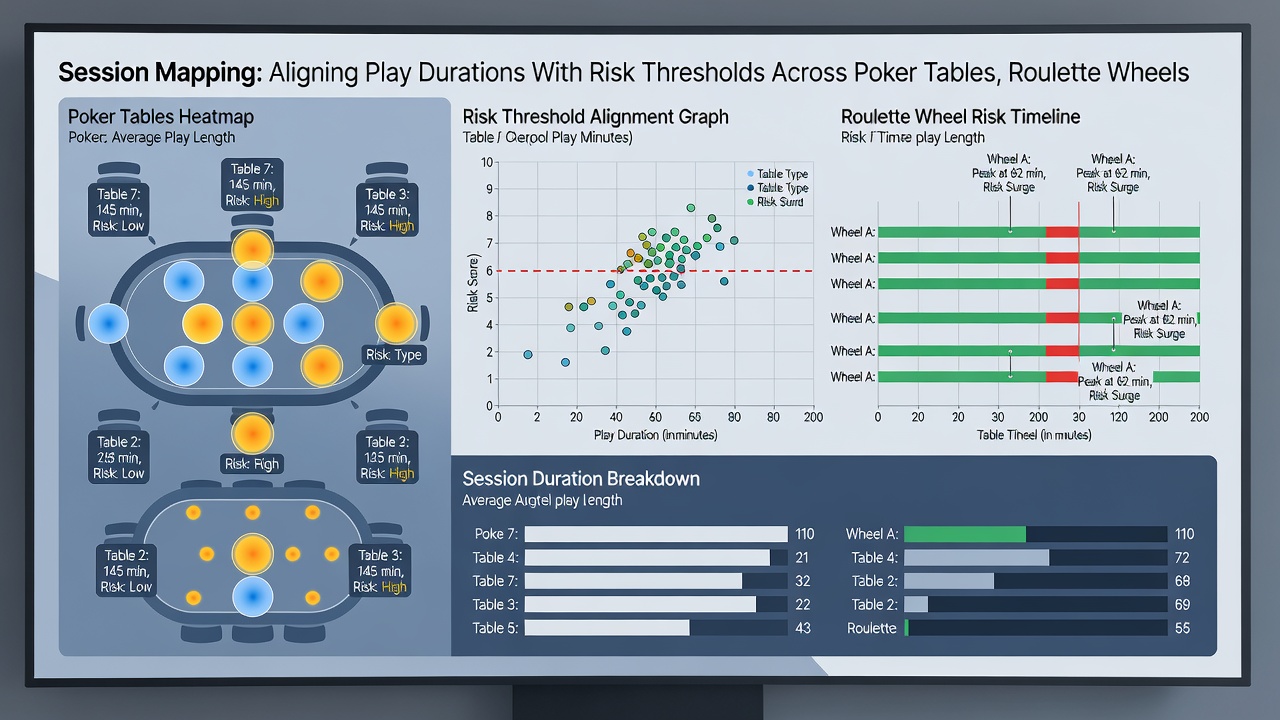
Cross-format mapping requires adjusting for game-specific variance profiles, and a 2024 academic paper from the University of Sydney's gambling research unit found that players who switch between formats without recalibrating time and stake parameters experience mismatched risk exposure. For instance, a poker session calibrated for 120 minutes at 1 percent bankroll risk per hand does not translate directly to roulette, where the same bankroll percentage can be exhausted in fewer than 40 spins at typical table limits. Track windows add another layer because each bet resolves independently, allowing session mapping to segment activity by race card rather than elapsed time alone.
Practical Mapping Frameworks Across Formats
Operators and independent analysts have developed software that logs session metrics in real time, and reports from the Canadian Centre on Substance Use and Addiction highlight how these tools help users set alerts when cumulative risk approaches preset thresholds. In poker the framework might cap orbits at a fixed number while monitoring standard deviation, whereas roulette mapping often uses spin counts tied to expected value decay, and track sessions segment by race number with automatic stops before the final events on the card. Data indicates that integrating these rules across platforms reduces total exposure during multi-game days because each format resets its own clock and risk meter.
Conclusion
Session mapping provides a structured method for coordinating play durations with risk thresholds, and available regulatory and academic records demonstrate measurable differences in outcome distributions when these parameters receive explicit definition. Continued collection of session-level data across jurisdictions will likely refine teh precision of these alignments as operators and researchers gain access to larger datasets from both land-based and digital environments.