Referee Assignment Patterns and Point Spread Adjustments in Basketball Leagues
Written by Zara Lorenz · May 28, 2026
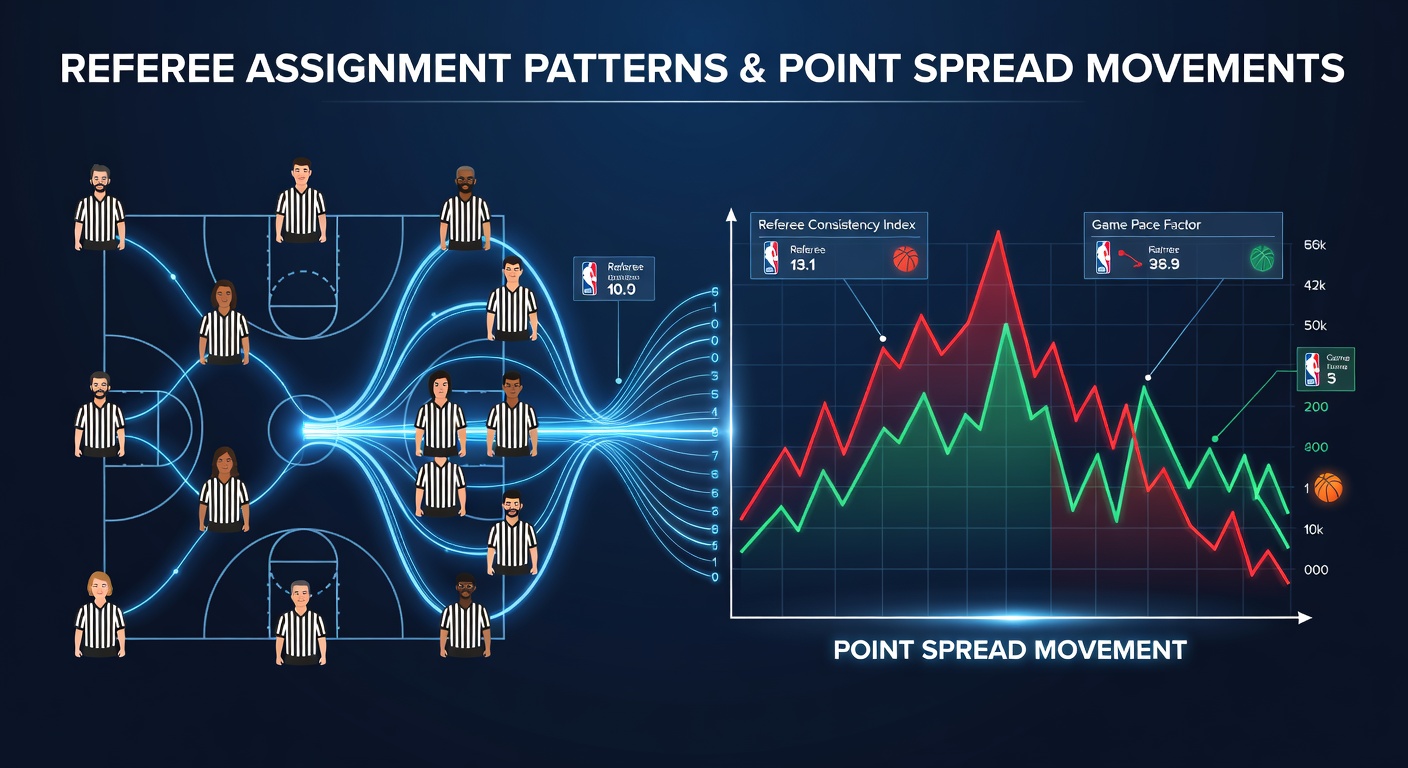
Referee Assignment Patterns and Point Spread Adjustments in Basketball Leagues
Referee assignments in basketball create measurable shifts in how games unfold, and those shifts translate directly into point spread movements tracked by sportsbooks across multiple leagues. Data from professional and collegiate circuits shows that certain officials consistently record higher foul rates, altered pace statistics, and variance in scoring margins, which prompts line makers to adjust spreads before tip-off or in real time.
League schedulers release referee rotations weeks in advance in many conferences, allowing analysts to compile historical performance profiles for each crew. When a team known for physical defense draws an official who averages 22 fouls per game over a five-year sample, the projected total points often rises while the spread narrows or widens depending on which side benefits from the style mismatch.
Historical Data on Crew Tendencies
Studies compiled by sports analytics groups indicate that referee crews fall into distinct categories based on foul distribution and timeout enforcement. One category calls fewer than 18 personal fouls per contest on average, while another exceeds 24. These patterns hold across home and away games, though the effect intensifies when a high-foul crew works a matchup between two teams with divergent free-throw attempt rates.
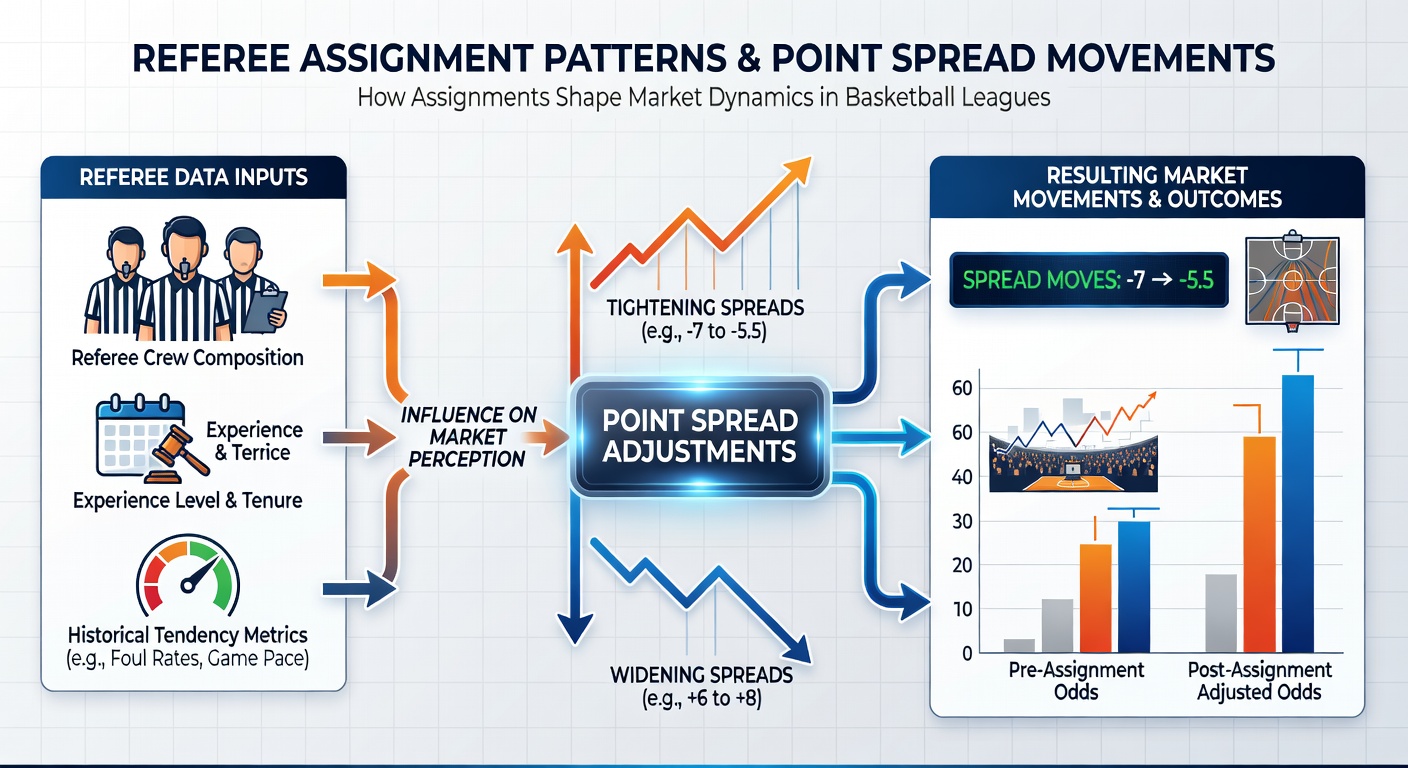
Point spreads move accordingly because oddsmakers incorporate the expected foul differential into their models. A spread that opens at minus four can shift to minus five and a half within hours once the referee assignment becomes public, especially if historical data shows the visiting team receives fewer favorable calls under that specific crew chief.
Impact on College and Professional Circuits
In NCAA Division I conferences, referee assignments rotate across multiple games per week, creating frequent opportunities to observe crew-specific effects. Conference offices publish game logs that include individual official identifiers, allowing researchers to track performance over entire seasons. Teams that play at a slower tempo experience larger spread movements when paired with crews that permit more physical play, because the projected scoring margin changes by an average of 3.2 points according to multi-year aggregates.
Professional leagues maintain similar transparency through official reports released after each round of games. Assignments for nationally televised contests receive extra scrutiny because betting volume increases and any deviation from expected foul totals produces sharper line corrections. Observers note that crews assigned to back-to-back nights sometimes carry forward tendencies from the previous game, which oddsmakers factor into overnight adjustments.
Real-Time Line Movement Mechanics
Bookmakers monitor referee announcements through league channels and cross-reference them with proprietary databases that quantify each official's historical influence on scoring and fouls. When an assignment deviates from the season average, automated systems flag the game for manual review. Traders then decide whether to move the spread by half a point or a full point before significant wagers arrive.
External factors such as travel schedules or rest advantages interact with referee patterns. A crew that favors quick whistles can amplify the effect of a short-handed roster, prompting earlier and larger spread adjustments. Data collected through May 2026 shows that games involving crews with above-average foul rates produced spread movements exceeding two points in 37 percent of instances where the assignment was released at least 48 hours in advance.
Geographic and League Variations
Different basketball organizations exhibit distinct referee cultures. European professional leagues emphasize stricter enforcement of contact rules compared with some North American circuits, resulting in different baseline foul averages. Analysts comparing transatlantic data find that spread volatility increases when teams cross between systems, because referee crews adapt their calls gradually rather than immediately.
Canadian university leagues and Australian professional competitions publish detailed post-game reports that enable similar pattern tracking. These datasets reveal that referee assignments influence not only foul totals but also the frequency of technical calls and replay reviews, both of which affect game length and, indirectly, betting market reactions.
Analytical Tools and Public Data
Organizations such as the NCAA statistics portal provide game logs that support crew-level analysis when combined with referee identifiers. Independent research centers at several U.S. universities have published papers examining how foul-rate variance correlates with margin-of-victory distributions across conference play. Those studies supply the quantitative foundation that sportsbooks reference when calibrating models.
Industry reports from analytics firms further document that referee-driven spread movements occur most frequently in the first half of conference seasons, when assignments remain less predictable. As the schedule progresses and patterns stabilize, line adjustments become smaller yet still statistically significant in high-volume markets.
Conclusion
Referee assignment patterns supply a measurable input that shapes point spread movements across basketball leagues at every level. Historical foul rates, crew-specific tendencies, and the timing of assignment releases combine to produce predictable line shifts that bettors and bookmakers both monitor. Continued publication of detailed game logs and crew identifiers supports ongoing refinement of these models through the 2026 season and beyond.