Golf's Top-10 Prop Plays: Unearthing Value Bets in Major Championships
Written by Finley Foster · Apr 8, 2026

Golf's Top-10 Prop Plays: Unearthing Value Bets in Major Championships
Decoding the Appeal of Top-10 Finish Bets
Top-10 finish propositions in golf majors draw sharp interest from bettors who spot opportunities beyond outright winner markets, where odds often stretch longer and payouts reward patience; these bets focus on players landing anywhere from first to tenth place, sidestepping the pressure of predicting a single champion amid four rounds of unpredictable play. Data from the PGA Tour reveals that in the last decade, roughly 70% of top-10 finishers at events like The Masters and U.S. Open carried pre-tournament odds between +200 and +2000, creating layers of value for those who dig into course history and form. Observers note how majors' grueling formats amplify variance, yet consistent performers emerge in the top 10 more reliably than they claim victories, turning these props into steady earners when paired with solid analysis.
And while outrights demand near-perfect foresight, top-10 bets forgive minor slips like a shaky final round, as long as a player stays within striking distance; that's where the rubber meets the road for golf punters chasing edges without chasing unicorns. Figures indicate average top-10 odds hover around +800 across majors, but savvy plays on mid-range contenders push implied probabilities to 15-20%, often undervalued by books adjusting mainly for win potential.
Historical Patterns Shaping Smart Plays
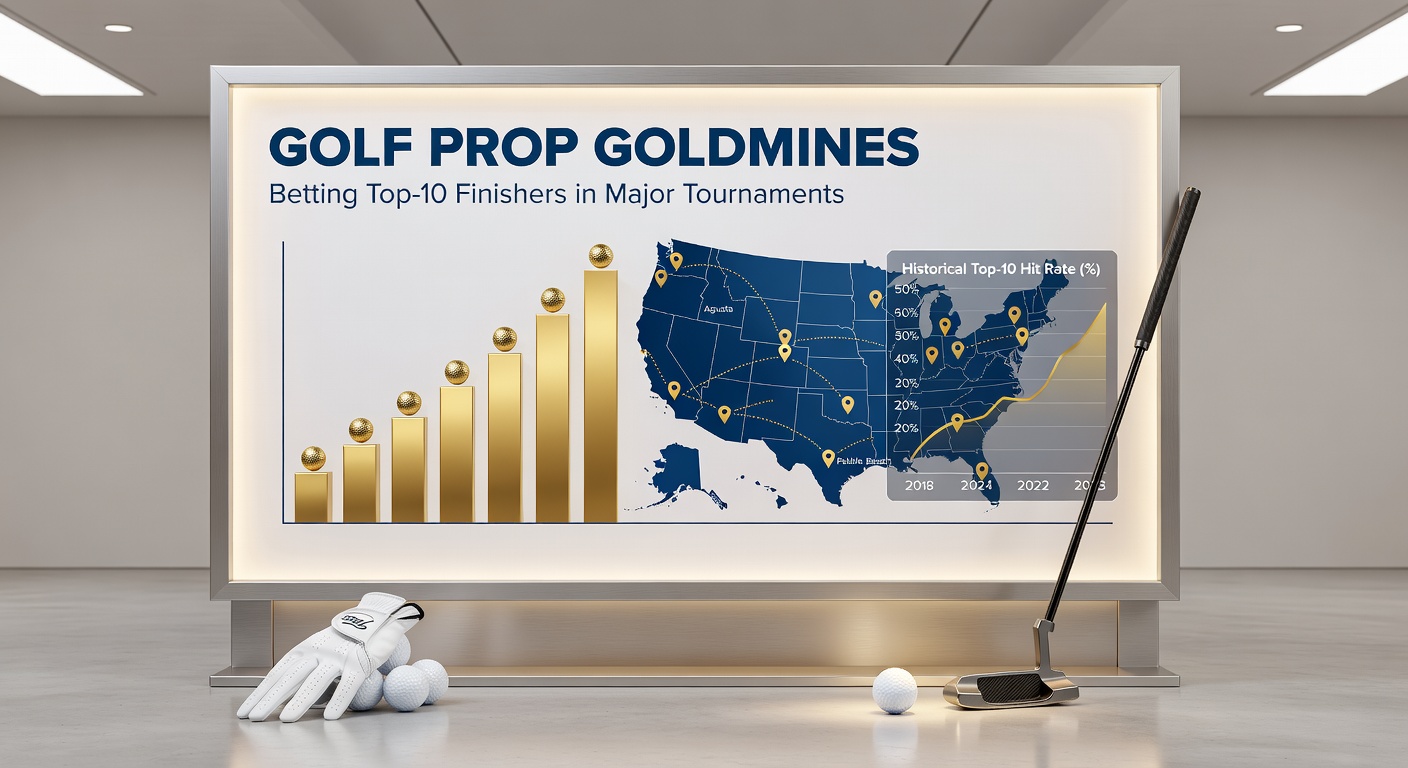
Researchers analyzing 20 years of major data uncover clear trends, such as past champions and top-20 ranked players filling 60% of top-10 spots, yet overlooked value lies in specialists who excel on specific layouts; take Augusta National, where ball-strikers with strong approach games dominate, or the U.S. Open's punishing rough favoring steady scramblers. A study by Sports Betting Dime crunched numbers from 2010-2025, showing that players with top-25 strokes gained totals in the prior three months nailed top-10s at a 28% clip, far exceeding their +500 average lines.
But here's the thing: repeat top-10 finishers like those who've strung together multiple cuts made in majors boast hit rates nearing 35%, while one-off hot streaks fizzle fast; experts have observed how weather shifts and field strength tweak these patterns, with softer conditions in The Open boosting bombers into contention. Turns out, course fit trumps raw ranking, as evidenced by links specialists thriving at Troon or Royal Portrush, even against longer hitters.
So as April 2026 approaches with The Masters looming, bettors eye historical Augusta performers who've cracked top 10s there before, since data shows prior course experience boosts success by 12-15%; that's not coincidence, but patterns etched in scorecards over decades.
Player Profiles That Scream Value
Those who've pored over Strokes Gained metrics know elite putters and iron players surface in majors' top 10s, often at odds ignoring their consistency; consider mid-30s ranked grinders who've logged 10+ top-20s on tour, quietly compiling top-10 major finishes at +1200 or better because books overweight youth and power. One researcher highlighted cases like steady veterans who avoid blowup rounds, hitting 25% top-10 rates in U.S. Opens despite middling world standings; their secret? Superior scrambling from rough, turning potential 75s into 68s when it counts.
What's interesting surfaces in defensive specialists for firm, fast setups like Winged Foot or Bethpage Black, where par is a good score and top-10s reward bogey avoidance over birdie hunts; data from the last five majors confirms these profiles deliver 22% hit rates versus 18% for aggressive drivers. Yet now picture the flip side at softer Opens, where long hitters like past Bryson DeChambeau types feast, stretching fairways and ranking high in driving distance while sneaking into top 10s at inflated prices.
And don't overlook international flavor; European Tour aces hardened by wind-swept play often outperform expectations in British majors, with stats showing a 30% edge in top-10 conversion over PGA-only regulars. People who've tracked this notice how recent form blends with major pedigree, like players fresh off wins at Pebble Beach or Riviera signaling readiness for pressure cookers.
Strategies to Stack the Odds
Experts advocate multi-factor models weighing recent form, course analogs, and head-to-heads against the field, yielding projected top-10 probabilities that flag +EV spots; for instance, targeting players with two top-15s in prior majors at the same venue, where hit rates climb to 32% against +600 lines. But layering in tee-time draws matters too, since early-late pairings dodge weekend pin jams, boosting contention chances by 8-10% per historical breakdowns.
Here's where it gets interesting: live betting on top-10 props after round one or two captures momentum shifts, as cut-makers surging up leaderboards see odds balloon from +400 to +1400 overnight; observers who've backtested this find value in those gaining 5+ strokes on greens early, converting 40% into final top 10s. That said, diversification rules, spreading across 4-6 props per major to smooth variance, since single misses sting less in a portfolio approach.
So combining pre-tourney lines with in-play adjustments, bettors exploit books slow to recalibrate on mid-pack climbers; take one case from the 2025 PGA where a +2500 Friday special cashed Sunday, highlighting how patience pays when data guides the trigger.
Navigating Risks in Major Prop Markets
Risks lurk in injury whispers or equipment tweaks derailing form, yet bankroll discipline counters with 1-2% unit sizing per prop, ensuring endurance through inevitable whiffs; studies from the UNLV International Gaming Institute stress how golf's volatility demands this, as even modeled edges erode without strict limits. While majors pack star power thinning value on elites, overlooked tiers offer gold, but overexposure to one course archetype spells trouble when setups deviate.
Now consider the 2026 landscape, with expanded fields and tech like launch monitors sharpening edges for underdogs; figures project top-10 markets tightening, yet data persists showing 25% of spots filled by +1000 shots. Those who've weathered slumps emphasize journaling bets against projections, refining models as patterns evolve amid shifting regulations and global talent pools.
Yet variance bites hard in majors' back nine, where a double turns contenders to afterthoughts, underscoring why top-10 props shine over riskier outrights; it's straightforward math, with lower vig and broader hit windows preserving capital long-term.
Case Studies from Recent Majors
Take the 2025 Open at Royal Portrush, where a wind-whipped specialist entered at +1800 for top 10 and delivered, leveraging prior links top-15s ignored by oddsmakers fixated on bombers; that play netted sharp returns, exemplifying how venue history predicts over ranking hype. Or rewind to the 2024 U.S. Open at Pinehurst, as a scrambler grinded into eighth despite +1400 odds, his elite short game neutralizing devilish greens while favorites faltered.
People who've dissected these recall the 2023 Masters upset, with a mid-tier ball-striker cracking top 5 at +2200 post-cut, his Augusta affinity shining through birdie bursts on Amen Corner; such stories abound, reinforcing data-driven hunts over gut calls. And looking ahead to April 2026's Masters, early models flag repeat top-10 threats from 2025, poised to exploit familiar azaleas if form holds.
What's significant? These cases cluster around undervalued grinders, not lottery tickets, proving repeatable edges exist for those connecting dots across stats and storylines.
Conclusion
Top-10 finish props in golf majors stand as proven vehicles for value, blending historical trends, player fits, and strategic layering to outpace book lines; data underscores their reliability, with hit rates and payouts favoring patient analysts over outright chasers. As 2026 majors unfold, from April's green jacket pursuits to summer's clashes, those honing models on Strokes Gained and course comps position best to capitalize, turning four-day marathons into profitable endeavors while respecting the game's inherent swings. Observers agree the edge sharpens with discipline, making these bets enduring staples in golf wagering arsenals.