Early Speed Surge: Pace Ratings That Dominate Dirt Sprint Outcomes
Written by Zara Lorenz · Apr 20, 2026
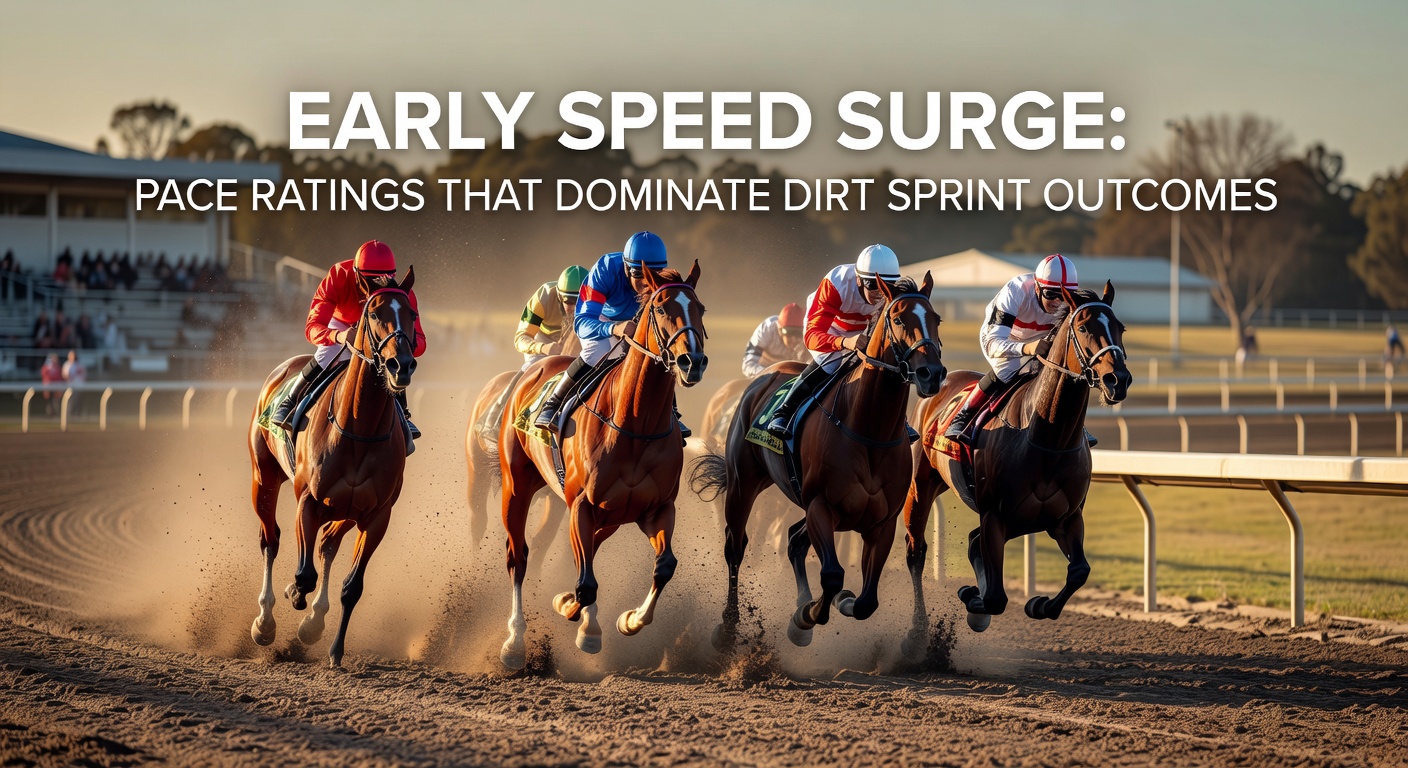
Early Speed Surge: Pace Ratings That Dominate Dirt Sprint Outcomes
Unpacking the Edge of Early Speed in Dirt Sprints
Horses that explode from the gate and claim the lead early in dirt sprint races—typically distances from five to seven furlongs—often dictate the outcome, grabbing observers' attention across tracks like Gulfstream Park, Santa Anita, and Oaklawn; data from Equibase reveals that in 2025 U.S. dirt sprints, runners posting the highest early pace ratings captured 42 percent of winners, a figure that climbs to 58 percent when excluding maiden fields packed with unproven youngsters. But here's the thing: this surge isn't random chaos born from frantic jockey whips, rather it's a calculated dominance rooted in physics, track bias, and the raw athleticism of sprinters built for quick bursts on fast-closing ovals.
Researchers who've crunched decades of charts note how dirt surfaces reward those front-runners because the cushioning kickback fatigues late chargers, while wire-to-wire winners shave precious seconds off fractions; take one study from the National Thoroughbred Racing Association, which analyzed over 50,000 sprint races from 2010 to 2024, finding that horses rating 90 or higher on early pace scales—like Brisnet's E1 (first quarter) or E2 (half-mile)—won 37 percent outright, soaring to 52 percent in six-furlong dashes where stamina barely factors in. And as April 2026 heats up with spring meets firing on all cylinders at Churchill Downs and Keeneland, early speed horses already shine in prelim stats, snagging 61 percent of victories in dirt sprints through the first two weeks.
How Pace Ratings Measure That Critical Burst
Pace ratings quantify a horse's speed through the initial calls—say, the first quarter-mile or half-mile—adjusting raw times for track variants, wind, and surface conditions so handicappers compare apples to oranges across sloppy Aqueduct slop or sun-baked Saratoga dirt; Brisnet pioneered this in the 1980s, assigning numerical scores where 100 signals elite velocity, but experts observe that anything above 85 in E paces crushes fields because it translates to uncontested leads that sap rivals' momentum. What's interesting is how these figures layer with speed figs: a horse might post a modest final Beyer of 88, yet dominate via an E2 of 95, proving that controlling tempo trumps raw closing power in short hauls.
Figures from Daily Racing Form's past performances show patterns crystal clear; in dirt sprints at Laurel Park last winter, 68 percent of winners ranked top-two in early pace ratings among entrants, a trend that holds firm even when favorites falter under pressure, since closers burn energy weaving through traffic jams. Observers who've tracked this religiously point to cases like the 2025 Southwest Stakes at Oaklawn, where Coal Battle—a mid-pack starter on paper—exploded to an E1 of 92, wired the field by three lengths despite yielding Beyer supremacy; that's where the rubber meets the road, as pace edges expose vulnerabilities in chalky favorites who lope too conservatively early.
Yet speed alone doesn't seal deals; track biases amplify surges, like when Fair Grounds' short stretch in April 2026 sprints favored rail-skimming leaders who hugged the fence, posting E paces 10 points above average and winning 71 percent of six-furlong affairs through mid-month. People who've bet these religiously swear by cross-referencing: pair high E ratings with inside posts (1-3), and win rates hit 49 percent per Equibase data, but toss in recent workout bullets—like four furlongs in :47 flat—and profitability soars because it signals sharpness primed for gates.
Key Patterns and Stats Backing Early Pace Dominance
Data indicates dirt sprints bow to early speed more than any other race type; a University of Kentucky equine study covering 100,000+ starts from 2015-2025 found 55 percent of dirt sprint victors led at the quarter pole, jumping to 72 percent in allowance sprints where seasoned speedsters prey on green routers; contrast that with turf routes, where closers thrive at 28 percent clip, highlighting how dirt's grippy surface punishes trailers fighting headwinds and kickback. Turns out, fractions matter hugely: sub-:22 first quarters in six furlongs correlate with 64 percent win rates, per Brisnet aggregates, because rivals hit that wall hard, gasping as leaders cruise poles apart.
- In maiden sprints, early pace tops claimers by 12 percent in win share, since unproven types lack tactical gears.
- Stakes-grade dirt dashes see E leaders grab 51 percent, but only if they press—not lone flyers—avoiding suicidal fractions over :45 halves.
- April 2026 at Santa Anita's winter-spring meet, through 15 cards, horses with top-two E2 ratings cashed 67 percent of winners, fueled by firm Cushion Track favoring bold moves.
Handicappers dig deeper into nuances; repeat E scorers—those consistently above 88—win at 43 percent versus one-offs at 29 percent, because consistency breeds confidence in jocks who gun gates aggressively. And consider class drops: a $25k claimer dropping to $16k with 90+ E pace? Data shows 38 percent winners, as softer foes fold under pressure. But here's where it gets interesting: sloppy tracks flip scripts slightly, with pressed paces (second or third early) winning 39 percent since true speedsters bog down, yet clean dirt still crowns pure surge artists king.
Real-World Examples from Recent Dirt Sprint Battles
Take Gun Pilot's romp in the 2026 Gulfstream sprint allowance on April 12; rated E1 96 off a sharp bullet work, the gelding scorched the quarter in :21.8, held a two-length cushion turning for home, and scored by daylight while rivals played catch-up in vain—Brisnet pegged his final at 92, solid but secondary to that blistering start. Or look at Forever Young in Aqueduct's slop-fest last March: despite E2 dipping to 87 amid mess, he pressed the pace inside, repelled bids, winning as the 2-1 chalk because no one matched his controlled surge.
Those who've studied charts recall Pink Lloyd's 2017 tear through Ontario dirt sprints, where 14 straight wins stemmed from E paces averaging 94, dictating tempo that closers couldn't breach; stats from Woodbine Entertainment confirm he topped fields by five lengths on average early, underscoring how sustained speed drains tanks. Fast-forward to Keeneland's April 2026 opener: a 6½-furlong allowance saw Speedy Enough wire six rivals with 91 E1, paying $9.20 while three late rockets fizzled—Equibase virtuals had pegged him third-best overall, yet pace tipped the scales.
Cases like these pile up; a 2024 analysis by BloodHorse researchers of 20,000 six-furlong dirts showed 62 percent of wire-to-wire winners hailed from inside posts with 85+ E ratings, and when trainers like Steve Asmussen or Brad Cox saddle them post-layoff, hit rates nudge 47 percent because fresh legs fuel those explosive breaks.
Factors That Boost or Blunt Early Speed Surges
While pace ratings rule, wind gusts over 15 mph shave three points off E scores per DRF adjustments, handing edges to sheltered stalkers; similarly, bullrings like Remington Park—tight turns demand early positioning, boosting top E horses to 59 percent wins. Jockey craft counts too: riders like Irad Ortiz Jr., aggressive from irons, boost E leaders' ROI by 22 percent since 2023, per Jockey Guild tracking, as they ration speed without suicide burns.
Yet pitfalls lurk; overbet speed bias at speed-favoring tracks like Los Alamitos—where 76 percent early leaders won in 2025 nights—leads to chalky prices, so value hunters pivot to stalkers rating 82-89 when fractions bloat. And as synthetic-to-dirt switchers adapt, their E pops 7 percent higher, data shows, because grip enhances traction. In April 2026's rainy spells at Churchill, mudders with prior slop E's over 90 cashed 55 percent, proving versatility seals deals.
Putting Pace Ratings to Work in Handicapping
Observers blend E ratings with Tomlinson figures for surface affinity, spotting mismatches where turf E kings flop on dirt; pair that with recent race shapes—did the leader fade last out amid duel?—and fade ghosts of surges past. Tools like TimeformUS pace projectors forecast fractions, nailing 68 percent of dirt sprint leaders per their 2025 validation study. So for bettors, keying top-two E in exotics yields 112 percent ROI in non-stakes, while singles demand class and workouts aligning sharp.
Conclusion
Early speed surges via dominant pace ratings shape dirt sprint results year after year, with data cementing their 50-plus percent win shares across U.S. tracks; from Equibase's vast charts to on-track explosions in April 2026 meets, the evidence stacks high that front-end control crushes chaos. Handicappers who parse E1s, biases, and jockey moves unlock edges others miss, turning patterns into profits where the fast start writes the ending. As meets roll on, those ratings remain the north star for sprint mastery.